
South Africa and China: Pioneers of “Leaving No One Behind” towards a Community with Shared Future for Mankind
They oppose hegemony and aggression and are proponents of world peace believing in diplomatic solutions and non-interference.
Because China has proven to be economically adept and adaptable in the past, despite headwinds and challenges, it will continue to be in the future if the country remains balanced in its approach to self-sufficiency and global participation.
China is committed to promoting a new type of international relations, deepening and expanding global partnerships based on equality, openness and cooperation, and broadening the convergence of interests with other countries.
Alongside a guarantee to observe its policy’s continuity, the CPC is known for displaying resilience in its inherent nature of self-improvement to address any arising weaknesses in the process of implementation.
China’s people-centered development philosophy not only improves livelihoods but also brings social stability, thus offering a favorable setting that allows a society to achieve quick economic progress and prosperity.
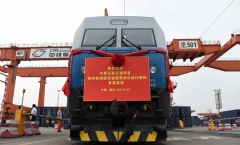
In the decade since its launch, China’s Belt and Road Initiative has proven to be an important engine of growth across the world.
The alleviation of poverty has achieved a dramatic change in this country and many of the remarkable things that have been known worldwide, which could serve as an inspiration to other societies, according to the differences of every society.
The GDI, in the spirit of prosper-thy-neighbor, presents a refreshing model that can help in building mutual trust, managing conflicts and bringing stability amid uncertain times.
If we break down the outcomes of the initiative, we can find that large projects under the BRI have greatly boosted the economy and improved local people’s livelihoods in many countries all over the world.
The Global Development Initiative demonstrates China’s enduring commitment to uplifting the fortunes of the developing world.
We can conclude that Central Asia and China will either share a common fate and success, or different fates and crisis. The current global turbulence pushes both sides to cooperate more with one another.
The most pressing challenge in this global environment is for countries to remain open, prudent and to act in their own best interests, as opposed to fighting the hegemonic struggles of other countries.