 Facebook
 Twitter
 Linkedin
 Google +
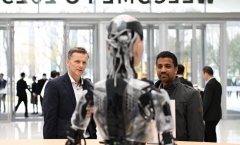
The Fight Over AI Is Becoming a Fight Over Government Power in America
The Anthropic case has become one of the clearest examples yet of how AI can quickly shift from being a commercial technology to a contested political weapon.

The Anthropic case has become one of the clearest examples yet of how AI can quickly shift from being a commercial technology to a contested political weapon.

A more balanced perspective would recognize that China is pursuing a deliberate and measured path, one that seeks to ensure long-term prosperity while navigating short-term uncertainties.

China’s new development model—centered on innovation, new quality productive forces and sustainable growth—aims to enhance both domestic resilience and global engagement.
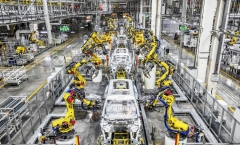
A China that continues to grow and transform, boost domestic demand, advance its technological capabilities and engage productively with the world not only benefits its own people but also offers genuine opportunities for shared prosperity globally.

There is a saying in Chinese, hé wéi guì (和为贵), which means ‘harmony is to be valued above all.’ Guided by this principle, I can truly say that Wuhan embodies a perfectly harmonious spirit.

The cure for these misunderstandings is face-to-face dialogue, immersive exchange and mutual respect for civilizational diversity—exactly what the GCI embodies.

Reopening shipping lanes, easing tensions, and restoring communication are in the interest of the Middle East, major energy-consuming countries, and the world as a whole.

In Xinjiang, I felt that in a broader sense, not just family reunion, but a city reuniting with itself: different communities stepping into the same celebration, in the same spaces, at the same moment.

By anchoring development in high-tech sovereignty, the leadership is ensuring sustainability in an increasingly volatile world.

China is demonstrating that it is possible to achieve high-quality economic development, technological innovation, social progress and environmental sustainability in a peaceful and people-centered way.
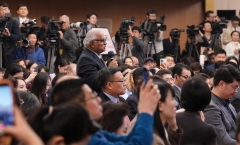
Always be aware, then, of the ‘subtle propaganda techniques’ used by Western journalists since truthfulness may be lacking in their attempts at cross-cultural communication.

China’s greatest advantage is not just in isolated breakthroughs but in the coherence and depth of its industrial ecosystem.