- Home
- My Understanding of China
My Understanding of China
The GDI will continue to uphold the spirit of openness and inclusiveness, inject momentum into efforts to address development deficits, and provide all nations with greater and fairer access to the fruits of development.
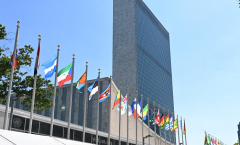
Five years after Chinese President Xi Jinping launched the Global Development Initiative (GDI) at the United Nations, the framework has grown from policy vision into more than 200 projects across over 70 developing nations.
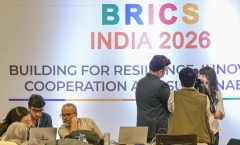
BRICS cooperation has moved beyond the outdated logic of political and military blocs, embracing a partnership based on mutual trust and mutual benefit.
Over five years, the Global Development Initiative (GDI) has grown from a Chinese proposal into a multilateral effort backed by more than 130 countries and international organizations, restoring development to the center of global governance.
Kyrgyzstan-China relations have passed through three distinct stages—border stabilization, institutionalization and infrastructure integration—and are now entering a fourth: economic connectivity on a transcontinental scale.
The visit consequently points towards a China-Africa relationship increasingly shaped by the interaction of trade, production, technology, finance and security.
For most of the world, cooperation is far preferable to conflict, and interdependence is far preferable to the law of the jungle.
At the strategic level, both countries need each other, and no long-term plans can be built without leveraging the deep-rooted relationship between them for the benefit of both peoples.
Viewed as a whole, this trip is best understood not as a discrete diplomatic event but as one installment in a broader and continuing pattern.
The GGI’s language points toward a harder standard: whether the people a policy was supposed to help noticed any difference in their own lives.
With the GGI, China is presenting its answer: Power should contribute to governance.
Nearly 160 countries and organizations have backed the Global Governance Initiative (GGI) in its first year. The next phase will carry that support into financing, digital rules and stronger representation for developing countries.
 Facebook
 Twitter
 Linkedin
 Google +