
What War Means
WWII brought tremendous sacrifices and heavy losses to humanity and the world. Reflecting on the past and taking history as a mirror, the international community has drawn ample lessons from this war, which remain of great relevance.
From the cautious gaze of Washington to the divided sentiments of Brussels, the denial of Japan, to the hopes of the Global South, the parade was a mirror of our times. It demonstrated the enduring relevance of WWII memory, the complexities of global power and the urgent need to confront the ideologies that threaten peace.
To remember that fascism was defeated by cooperation, not rivalry. And to see that the lesson of the past is not to prepare for endless confrontation, but to rediscover the possibility of partnership—before history repeats itself in even darker ways.
Despite its sufferings and pivotal role in the World Anti-Fascist War, China has followed a development trajectory culminating in its current status as a major country, assuming greater responsibilities and championing key initiatives on the international stage.
The Global South is finding its voice, and China is providing the framework for that voice.
Unlike some other countries, China’s military might is solely to provide a secure basis, a great wall of iron and steel, for the Chinese people to live a peaceful and happy life and to help secure, preserve and defend world peace.
The permanent seat on the Security Council symbolizes more than just great-power status: It’s a lasting recognition of China’s contribution to victory in the World Anti-fascist War and its enduring responsibility in shaping world peace.
The mirror of history reflects not only the tragedies of the past but also our present responsibility and future choices.
China’s wartime experience is just still less well-covered in much of the outside world than other major theaters such as Western Europe, North Africa and the Pacific.
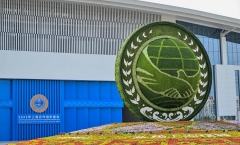
The Shanghai Cooperation Organization has developed into an important international mechanism for global governance and international cooperation.
If it succeeds, the organization will not just represent nearly half of humanity on paper, it will shape the daily economic lives of that half in tangible, lasting ways.
World War II was a truly global cataclysm, fought across continents by diverse peoples whose sacrifices demand recognition. Until we acknowledge that truth, we remain trapped in a story that serves power rather than history, a story where victors write the script, and everyone else fades to black.